
Co-ordination Drills to Challenge Your Movement
Looking for new co-ordination drills to add to your training?
You don't need to reinvent your entire workout. Co-ordination can be explored through simple movements involving throwing, catching, bouncing, footwork, reaction cues and different body positions.
The following 20 drills provide plenty of ideas to get started.
Ball-Focused Co-ordination Drills
1. Vertical Toss and Catch
Toss one ball vertically and catch it with the same hand. Repeat on both sides.
2. Cross-Body Catch
Throw from one hand across your body and receive the ball with the opposite hand.
3. Alternating Bounce Catch
Bounce a ball with your right hand and catch with your left. Reverse the pattern.
4. Under-the-Leg Toss
Raise one leg and toss or pass the ball underneath before catching it.
5. Behind-the-Back Transfer
Pass the ball from one hand to the other behind your body before returning it to the front.
Footwork and Ball Drills
6. Marker Weave Toss
Arrange several markers and weave through them while maintaining a controlled ball toss.
7. Lateral Shuffle Catch
Move laterally between two markers while catching passes from a partner.
8. Forward-Backward Toss
Move between two markers while continuously tossing and catching.
9. Diamond Movement Catch
Create a diamond with four markers and move toward different points while maintaining a ball task.
10. Marching Under-the-Leg Toss
March while transferring the ball beneath each raised leg.
These drills introduce full-body co-ordination because your lower body is completing one movement while your hands and eyes manage another.
Partner Co-ordination Drills
A partner can make co-ordination training more unpredictable.
11. Partner Drop Catch
Your partner drops a ball without warning and you react to catch it.
12. Partner Vertical Toss and Return
Your partner sends a ball vertically or toward you and you return it using an agreed catching and throwing pattern.
13. Blind Partner Catch Variation
Begin facing away or with your visual attention elsewhere before responding to your partner's agreed cue and locating the ball. Keep distances and throws appropriate to your ability.
14. Call and React Marker Catch
Arrange several markers. Your partner calls a marker or direction and incorporates a ball pass into the movement.
15. Alternating Partner Pass
Use two balls and alternate passes between partners, creating a continuous rhythm.

Reaction-Based Co-ordination Drills
Reaction drills introduce an element you cannot completely predict.
16. Colour Call Drill
Use different coloured markers. A partner calls a colour and you move toward the corresponding marker.
Add a catch or ball transfer once comfortable.
17. Left-or-Right Catch
A partner provides a left or right cue immediately before sending the ball toward the nominated side.
18. Numbered Marker Reaction
Assign numbers to markers and react to whichever number your partner calls.
19. Bounce Direction Reaction
A partner bounces the ball at different safe angles and you respond to the rebound.
20. Multi-Ball Reaction
Use several balls positioned around the training area. Your partner calls which ball to collect, catch or interact with.
What Makes a Good Co-ordination Drill?
More complicated doesn't automatically mean more effective or more appropriate.
A useful co-ordination drill should give you a movement problem you can actually attempt.
If you cannot perform any part of the movement, simplify it.
For example, if a two-ball moving drill is overwhelming, practise the two-ball pattern while stationary. Once comfortable, introduce walking. Then introduce a marker pattern.
This allows you to build complexity progressively.
Change One Variable at a Time
One of the easiest ways to create hundreds of co-ordination drills from a small number of exercises is to change one variable.
Change the hand.
Change the direction.
Change the ball.
Change your body position.
Change the distance.
Change the movement speed.
Add a partner.
Add a reaction cue.
A basic toss-and-catch drill can therefore have dozens of variations without requiring additional equipment.

Don't Forget Your Non-Dominant Side
Many people naturally default to their preferred hand or side.
Co-ordination training provides an opportunity to explore both.
If you perform ten catches comfortably with your dominant hand, switch.
You may notice the exact same drill suddenly requires much more concentration.
Add Co-ordination Drills to Existing Training
You don't necessarily need a separate hour-long session.
Co-ordination drills can be used during a general movement session, as part of sport training or simply as a short standalone activity.
You could select three drills and explore them for several minutes each.
Alternatively, turn the drills into a partner challenge.
How many successful alternating catches can you complete together? Can you move through the marker pattern without losing the ball sequence?
A small competitive or playful element can completely change the experience.
Explore Movement With C.CADDY
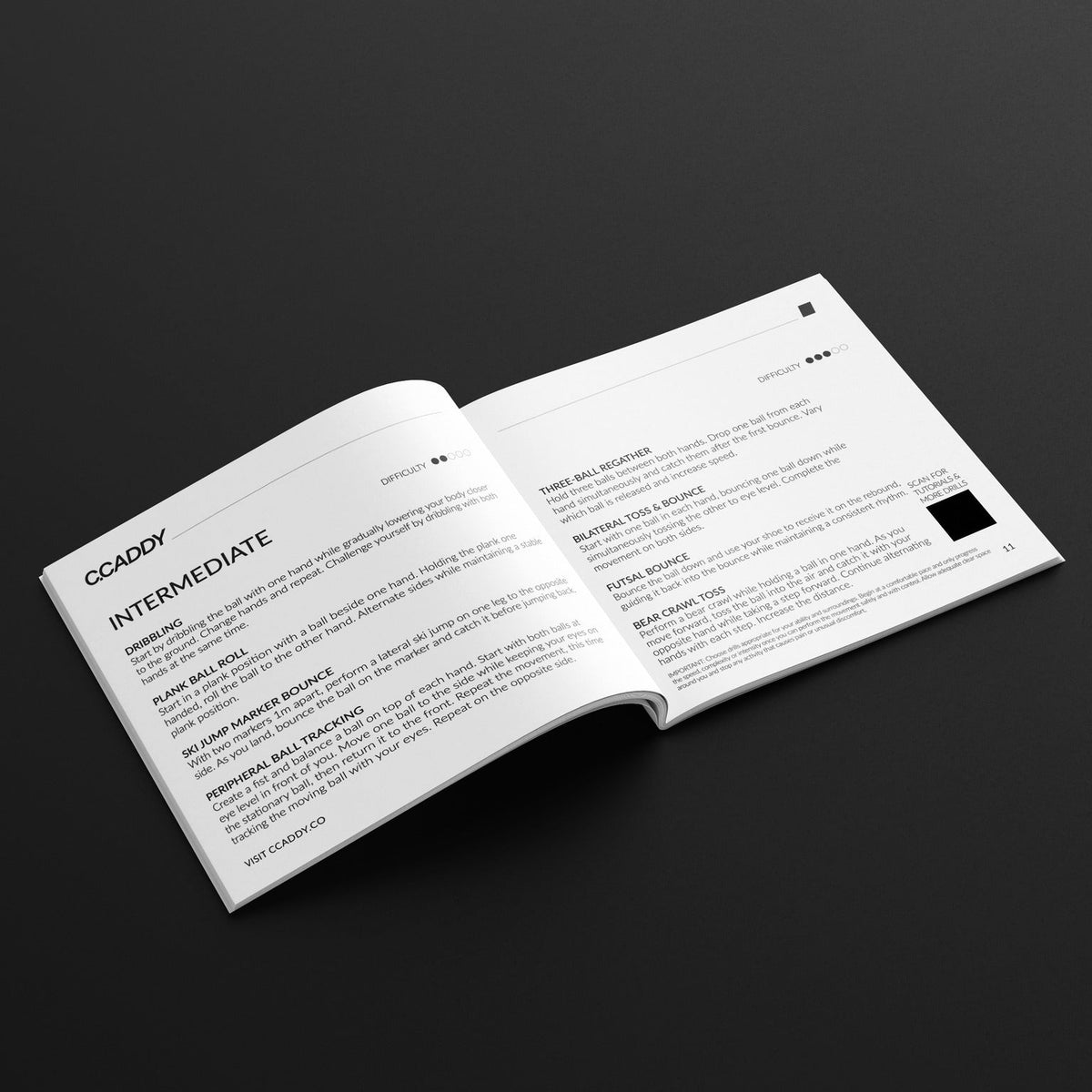
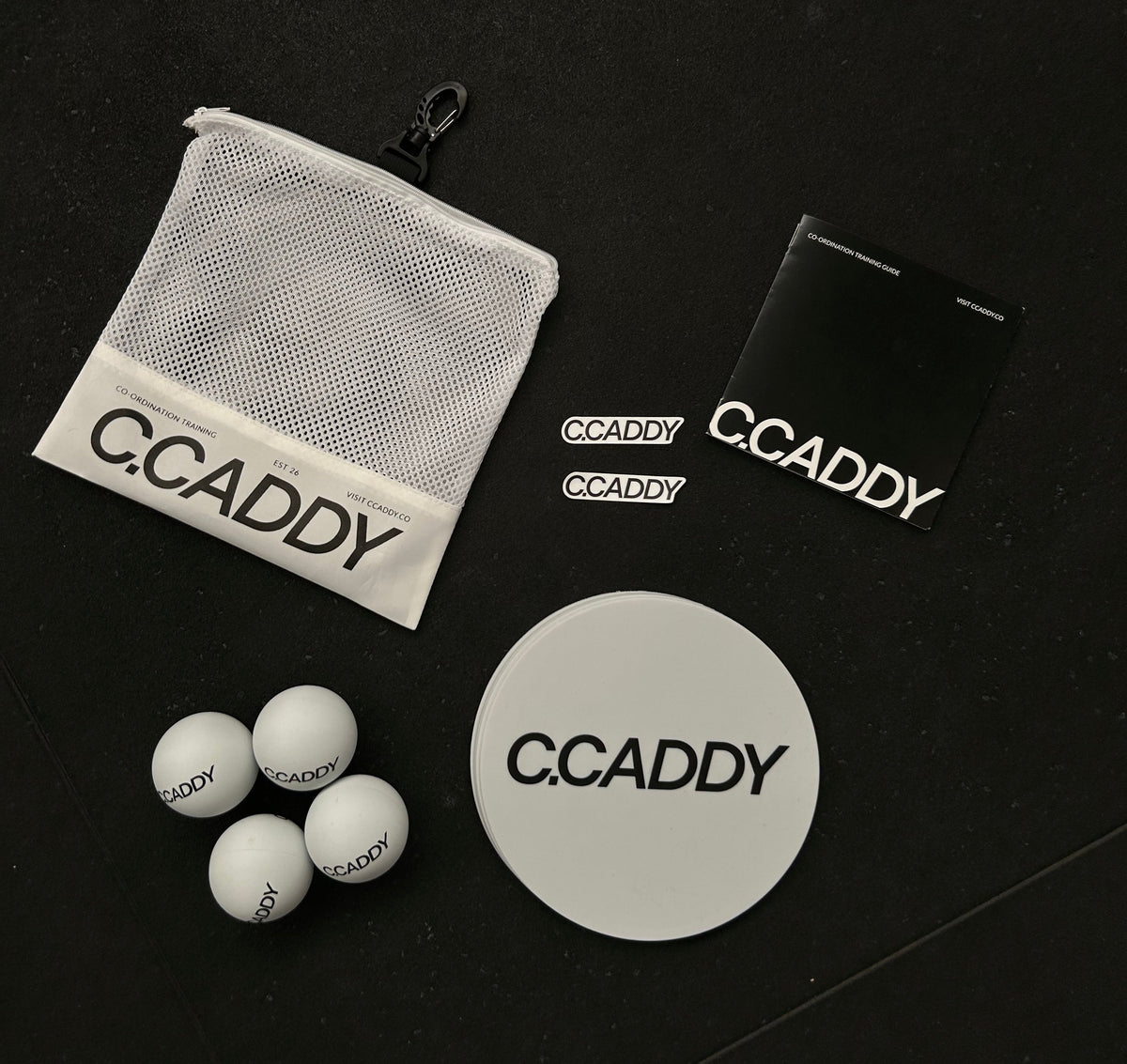
The C.CADDY Co-ordination Kit was designed to make this style of training easy to access.
With four rubber balls, six flat markers, a training guide and access to the C.CADDY Training Vault, you can create a huge range of movement combinations without needing a complicated setup.
Start simple.
Learn the pattern.
Then change it.
That's where the fun begins.
Read more
You probably use co-ordination far more often than you realise. Catching something that falls from a bench, stepping around an obstacle, changing direction during sport, throwing a ball, moving you...
Co-ordination training doesn't require complicated equipment or an enormous training space. With a few balls, some markers and a little creativity, you can build co-ordination exercises into almost...