
Co-ordination Exercises You Can Add to Your Training
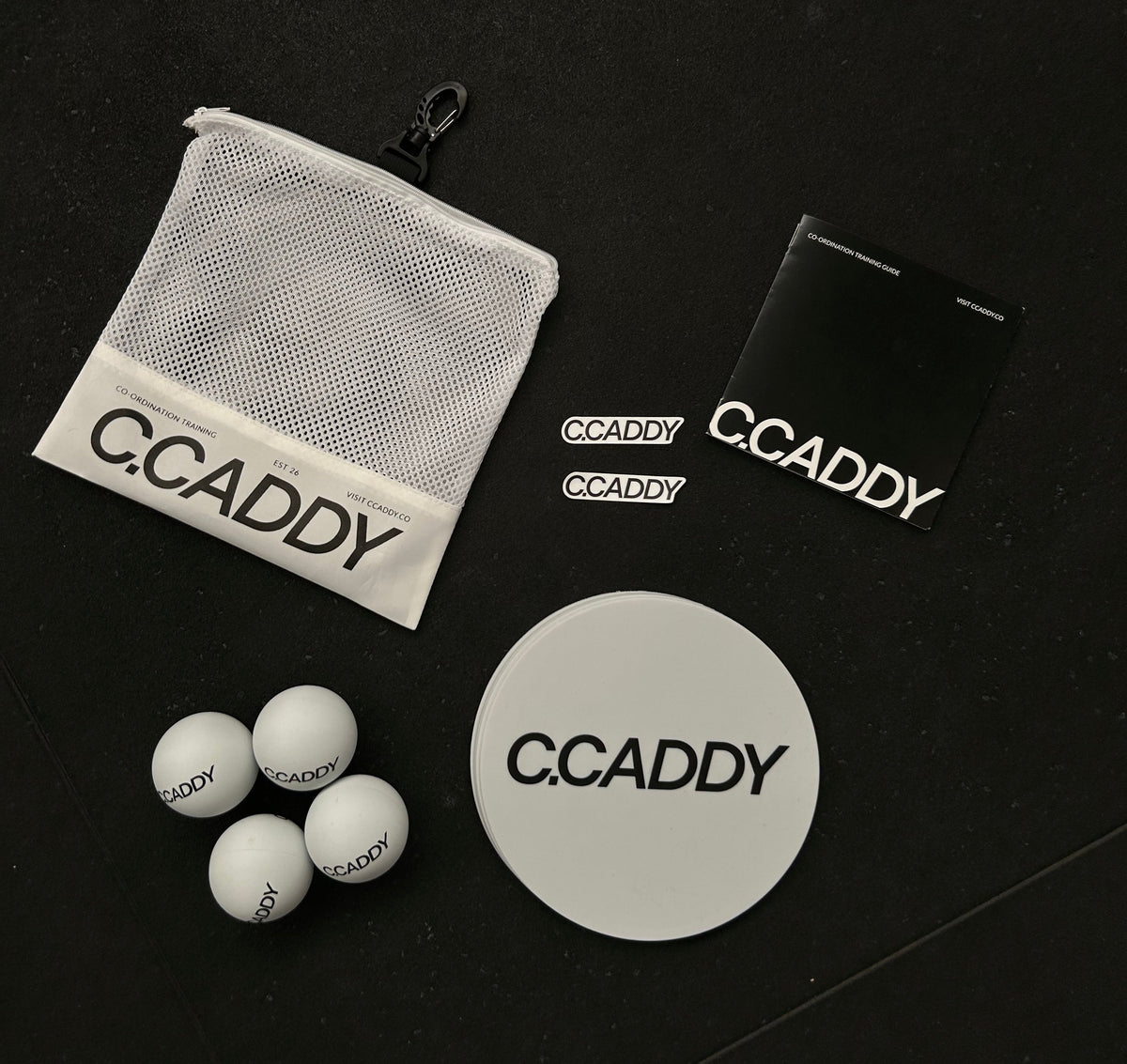
Co-ordination training doesn't require complicated equipment or an enormous training space. With a few balls, some markers and a little creativity, you can build co-ordination exercises into almost any training session.
Whether you're an athlete looking to introduce different movement challenges or an everyday mover wanting to mix up your training, the key is finding exercises that are challenging enough to require concentration without being so difficult that you can't establish the basic movement.
Here are 15 co-ordination exercises to get you moving.
1. Single-Hand Ball Toss
Start with one ball in one hand.
Toss it vertically and catch it with the same hand.
It sounds simple, but it creates a foundation for more complicated throwing and catching activities.
Try both hands rather than only your dominant side.
2. Alternating Hand Toss
Throw the ball from one hand to the other.
Start with a comfortable arc and gradually experiment with different heights.
Once the pattern becomes comfortable, try completing the movement while walking.
3. Ball Bounce and Catch
Instead of throwing the ball directly between your hands, bounce it off the ground before catching it.
Experiment with catching using the same hand or opposite hand.
You can also change the bounce angle to create a different challenge.

4. Under-the-Leg Toss
Stand comfortably and raise one leg.
Pass or toss the ball underneath the raised leg before catching it.
Alternate legs between repetitions.
This introduces a lower-body movement while your upper body completes the ball task.
5. Walking Toss and Catch
Walk forward while repeatedly tossing and catching a ball.
Once comfortable, introduce backwards walking or lateral movement where appropriate and where you have a safe, clear training area.
The aim is to maintain the ball pattern while your lower body continues moving.
6. Marker Weave With Ball Toss
Place several markers in a line.
Weave between them while tossing and catching a ball.
Start slowly and give yourself plenty of space between markers.
As you become familiar with the pattern, experiment with different marker layouts.
7. Partner Drop Catch
Have a partner hold a ball out in front of you.
When they release it, react and attempt to catch the ball after the drop.
You can adjust the starting distance or position to create different variations.
8. Partner Call and Catch
Stand opposite a training partner with two or more balls available.
Your partner provides a cue indicating which ball, side or movement you need to respond to.
The unpredictability adds a reaction component to the co-ordination exercise.
9. One-Hand Shoulder Tap
Hold or control a ball with one hand while using the opposite hand to tap your shoulder.
Alternate the movement pattern.
Once you understand the sequence, increase the rhythm gradually.
10. Marching Under-the-Leg Toss
March on the spot.
As each knee lifts, move the ball underneath the raised leg.
Alternate continuously from side to side.
This creates a repetitive full-body pattern requiring your upper and lower body to work together.
11. Lateral Marker Movement With Catch
Place two markers several steps apart.
Move laterally between them while tossing a ball to yourself or catching passes from a partner.
Rather than focusing only on speed, aim to maintain control of both tasks.
12. Two-Ball Alternating Toss
Take one ball in each hand.
Toss one ball and then the other, establishing an alternating rhythm.
Keep the throws low initially.
As the pattern becomes more familiar, experiment with different heights or tempos.
13. Wall Bounce Catch
Stand an appropriate distance from a solid wall.
Throw a ball against the wall and catch the rebound.
Change hands, angles or starting positions to create variations.
Always ensure the space and surface are appropriate for the activity.
14. Seated Bounce and Catch
Sit in a stable position with enough clear space around you.
Bounce the ball and catch it after changing the position of your hands or upper body.
This removes some lower-body movement and allows you to focus on the ball pattern.
15. Four-Marker Reaction Drill
Place four markers around yourself to create a small square or diamond.
Have a partner call a direction or marker.
Move to the appropriate marker before returning to the centre.
You can then add a ball toss, catch or pass to create an additional challenge.

How to Make These Co-ordination Exercises Easier
Every exercise doesn't need to start at maximum difficulty. If a drill feels too challenging, simplify one part. Slow down. Use one ball instead of two. Reduce your movement distance. Remove the reaction component. Practise the hand movement before adding footwork. Once the basic pattern feels comfortable, rebuild the exercise gradually.
How to Make Them Harder
You can progress many co-ordination exercises without completely changing the drill.
Try using your non-dominant side, introducing another ball, moving between markers, changing direction, adding a partner cue or combining the exercise with another movement. The important thing is to add difficulty with purpose. A drill isn't automatically better because it looks more complicated.
Build Your Own Co-ordination Workout
You can combine several of these activities into a simple co-ordination workout. Choose four or five exercises and spend approximately 30–60 seconds exploring each one before moving to the next. Rather than obsessing over repetitions, focus on understanding the movement pattern.
You could also choose one drill and experiment with several variations. The possibilities expand quickly once you start changing directions, ball numbers, movement patterns and cues.
Keep It Fun
One of our favourite parts of co-ordination training is that it gives you permission to experiment. You might drop the ball. You might completely lose the movement pattern. You might end up laughing with your training partner.
That's part of it.
C.CADDY was created to provide a simple way to explore co-ordination, balance, reaction and movement through accessible training activities. So grab a ball, set out a few markers and try something different.
Read more
Looking for new co-ordination drills to add to your training? You don't need to reinvent your entire workout. Co-ordination can be explored through simple movements involving throwing, catching, ...
If you've searched how to improve coordination, you've probably encountered everything from juggling to agility ladders and highly complicated reaction drills. The good news is that co-ordination t...