
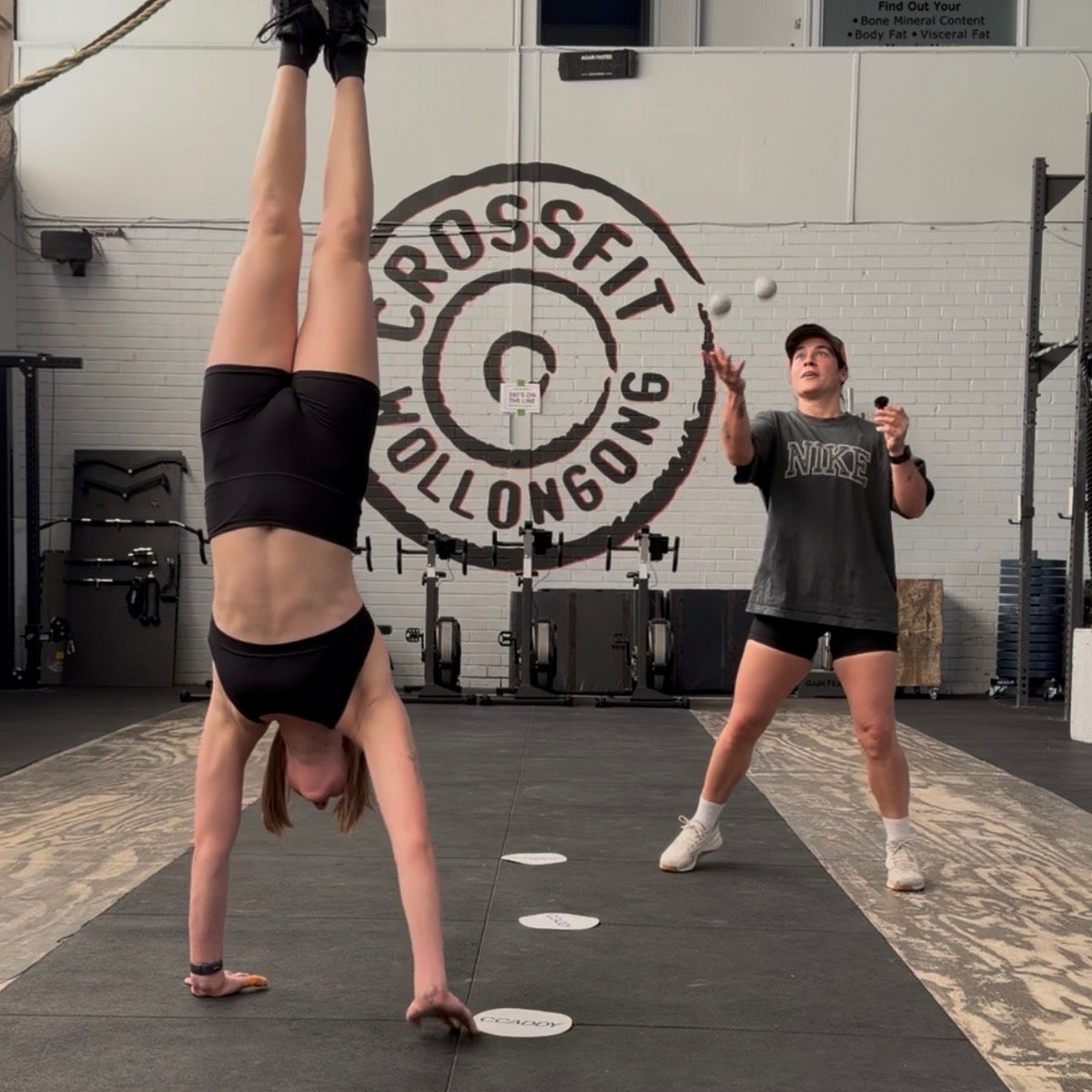
What Is Co-ordination Training? A Beginner’s Guide
You probably use co-ordination far more often than you realise. Catching something that falls from a bench, stepping around an obstacle, changing direction during sport, throwing a ball, moving your hands and feet at the same time or reacting to something in your peripheral vision all require different levels of co-ordination.
But while strength, speed and fitness are commonly given dedicated time in training programs, co-ordination can sometimes be overlooked.

That is where co-ordination training comes in.
Coordination training involves exercises and activities that challenge different parts of the body to work together effectively. Rather than simply completing a movement, you may need to react, track, catch, balance, change direction or complete different movements simultaneously.
The best part? It doesn’t need to be complicated.
What Is Co-ordination?
Co-ordination is your ability to organise different movements together to complete a task.
Think about catching a ball. Your eyes need to track its movement while your body adjusts its position and your hands move to meet it. If you are moving while catching, there are even more elements involved.
The same applies to everyday movement. Walking up stairs while carrying something, moving around another person or reaching for an object while maintaining your balance all involve co-ordinated movement.
Co-ordination isn't necessarily about completing complicated exercises. It is about how different movements and sensory information work together.
What Is Co-ordination Training?
Co-ordination training deliberately introduces exercises that challenge your ability to organise and control movement.
This could include:
- Throwing and catching
- Moving while handling a ball
- Following different movement patterns
- Responding to visual or verbal cues
- Moving your hands and feet independently
- Changing direction
- Balancing while completing another task
- Alternating between left and right sides
A simple ball toss can therefore become a co-ordination exercise.
For example, you might toss a ball with your right hand and catch it with your left. Once comfortable, you could walk while completing the same task. You could then introduce a marker to move around or have a training partner call which hand should make the catch.
The fundamental activity remains simple, but the co-ordination challenge increases.
Why Train Co-ordination?
Many training programs focus on measurable physical qualities such as repetitions, distance, weight or speed.
Co-ordination training introduces another challenge: how you move.
Instead of simply asking whether you can complete a movement, a co-ordination drill might ask whether you can complete it while reacting to another task.
This makes it an interesting addition to many styles of training.
For athletes, co-ordination exercises can introduce movement challenges that resemble some of the unpredictable elements experienced during sport.
For everyday movers, they provide a different way to move, concentrate and challenge yourself without every session needing to revolve around traditional gym exercises.
Co-ordination training can also bring an element of play back into movement.
Throw a few balls, markers and a training partner into the mix and suddenly your session can become much more interactive.
Different Types of Co-ordination
Co-ordination isn't just one thing. Different activities can challenge different aspects of movement.
Hand-eye co-ordination involves using visual information to guide hand movements. Catching and throwing activities are common examples.
Foot-eye co-ordination involves coordinating what you see with the movement of your feet, such as controlling or redirecting a ball.
Bilateral co-ordination involves using both sides of the body together.
Cross-body co-ordination involves movements that cross the body's midline or require opposite limbs to perform different actions.
Reaction-based co-ordination adds an unpredictable cue. Instead of knowing exactly what happens next, you need to react to a call, movement or visual signal.
Full-body co-ordination combines multiple areas of the body into one activity.
There can be plenty of crossover between these categories, which is why even relatively simple drills can become challenging.

What Equipment Do You Need?
You don't need an elaborate training facility to start co-ordination training.
Simple equipment can create hundreds of combinations.
Balls can be used for throwing, catching, bouncing, rolling and reaction activities. Markers can establish movement patterns, distances and directions.
You can also use a wall, training partner or open floor space to create additional variations.
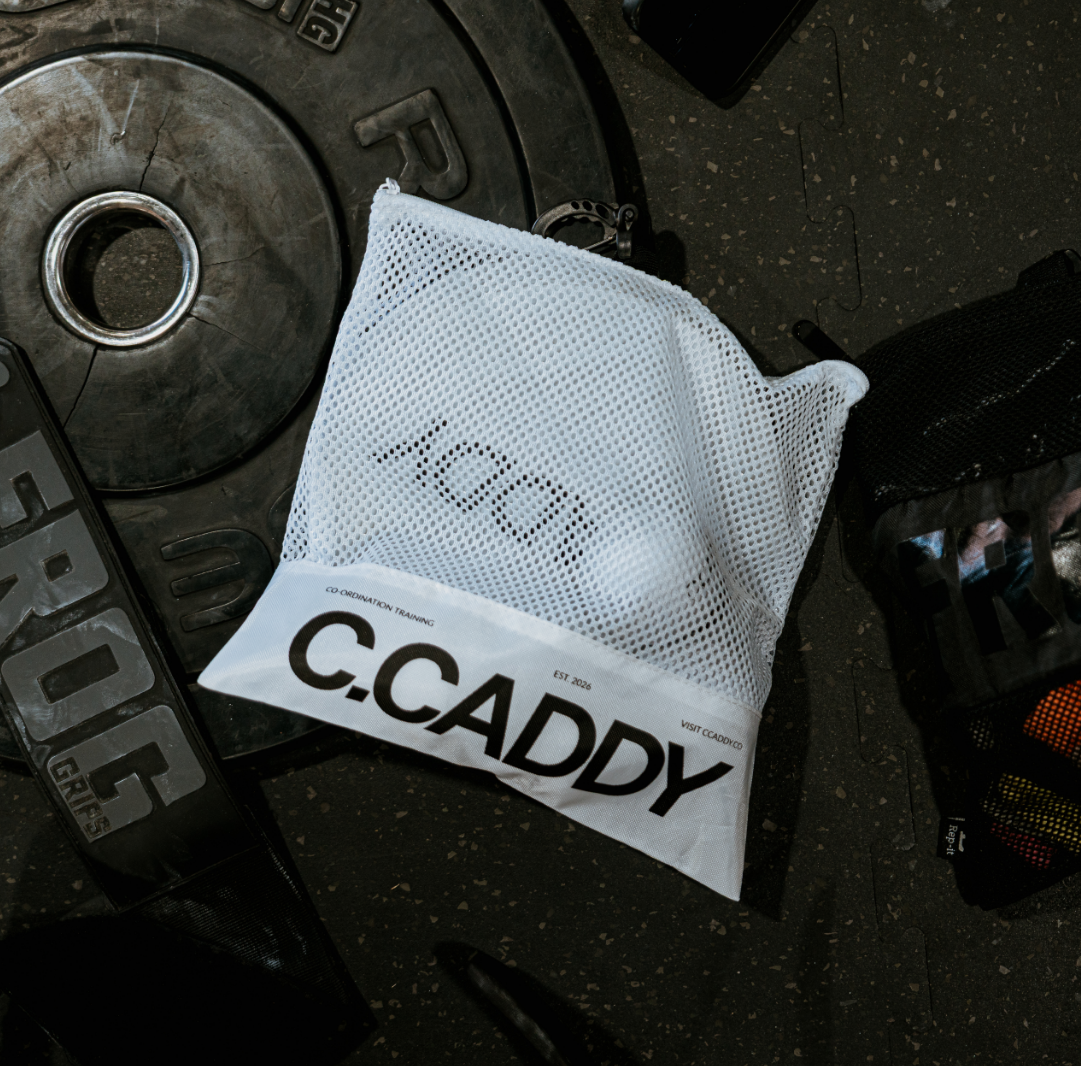
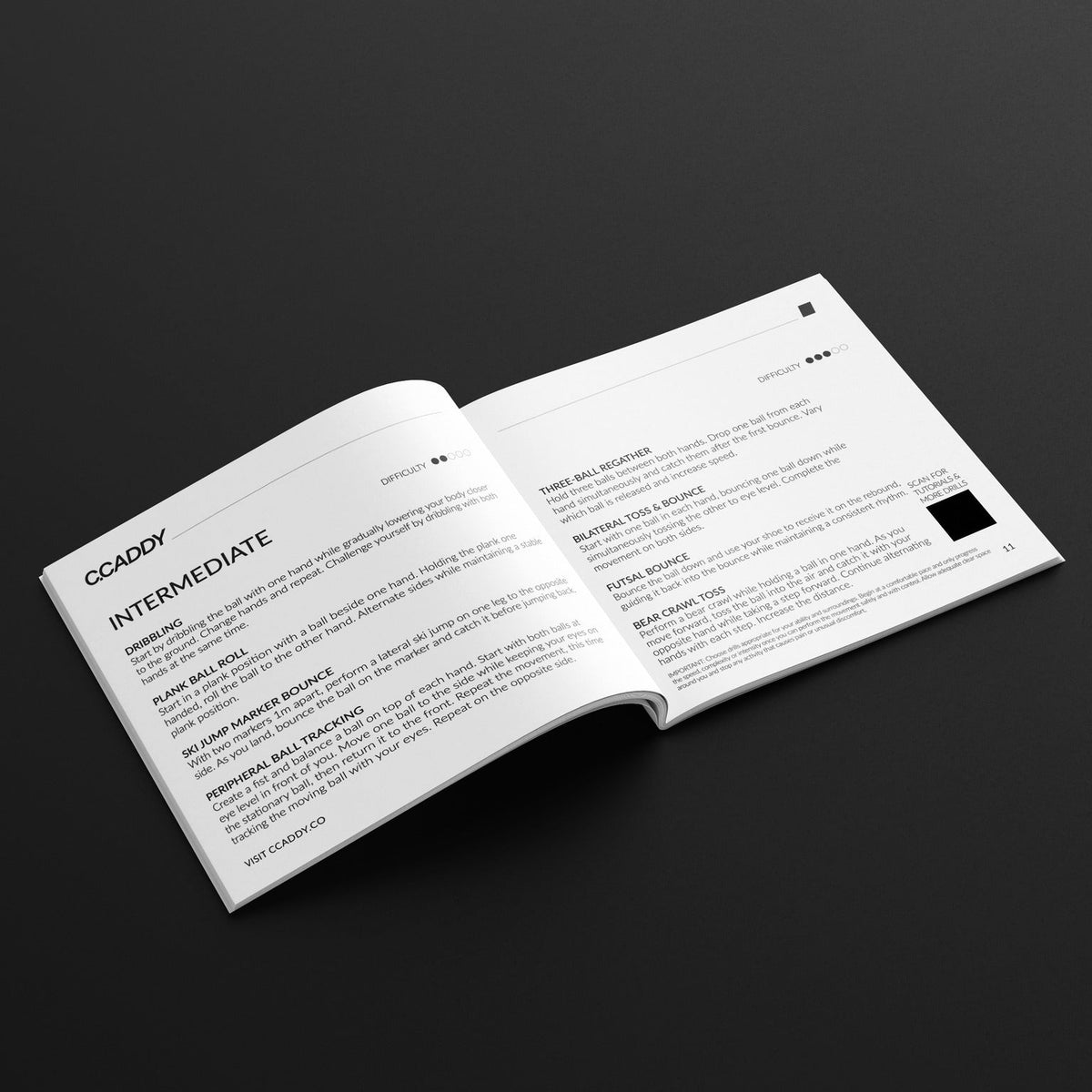
The C.CADDY Co-ordination Kit, for example, combines four rubber balls, six flat markers, a training guide and access to our online Training Vault so you have the foundations to start exploring different co-ordination exercises.
How Should Beginners Start?
Start simple.
One of the biggest mistakes with co-ordination training is making an exercise complicated before you can comfortably perform the basic movement.
Imagine you want to complete a walking ball-toss drill. First, practise tossing and catching the ball while stationary.
Then alternate hands.
Then begin walking.
Then introduce direction changes.
Then potentially add another ball or an external cue.
This creates progression without immediately turning the exercise into chaos.
Remember: dropping the ball isn't necessarily a failed repetition.
The challenge is part of the activity.
How Can You Progress Co-ordination Training?
Once a drill becomes comfortable, there are many ways to change it.
You could introduce another ball, increase your movement speed, change the distance between markers, use your non-dominant hand, introduce a partner, add a reaction cue or combine two movements.
You can also change your body position.
A throwing drill performed standing might feel completely different when performed seated, kneeling or while moving laterally.
Small changes can create entirely new co-ordination challenges.

Co-ordination Training Doesn't Need to Look Perfect
Co-ordination training can feel awkward. That is often part of what makes it interesting.
When learning a new movement pattern, you might drop balls, move in the wrong direction or need to slow everything down. That's okay.
Rather than trying to make every exercise look impressive, choose an appropriate level and give yourself time to understand the movement.
Add Co-ordination to Your Training
Co-ordination training doesn't have to replace the activities you already enjoy.
It can be added to a warm-up, incorporated between exercises, completed as a dedicated training session or simply used as a way to get moving.
Five or ten minutes can be enough to explore several drills.
At C.CADDY, we want to make the often-overlooked foundations of movement easier and more enjoyable to train.
Grab a ball. Put down a few markers. Start with something simple.
Move, react, explore different movement patterns and add a little play back into training.
Read more
After months of developing, testing, filming, refining and building, we’re getting incredibly close to officially launching C.CADDY. At the centre of it all is the C.CADDY Co-ordination Kit. A simp...
Looking for new co-ordination drills to add to your training? You don't need to reinvent your entire workout. Co-ordination can be explored through simple movements involving throwing, catching, ...