Co-ordination vs Agility vs Balance: What’s the Difference?
Co-ordination. Agility. Balance.
The terms are often used together in training conversations, and there can certainly be overlap between them. But they don't mean exactly the same thing. Understanding co-ordination vs agility, and where balance fits into the picture, can make it easier to understand what different training drills are actually asking you to do.
Let's break them down.

What Is Co-ordination?
Co-ordination broadly refers to your ability to organise different movements together to complete a task. Catching a ball is a simple example. Your eyes track the object while your body positions itself and your hands move toward the appropriate location.
Make the activity more complicated and additional elements become involved. You could catch while walking. You could alternate hands. You could move between markers. You could respond to a partner's cue before catching. Each variation changes the co-ordination challenge.
What Is Agility?
Agility generally refers to the ability to change body position or direction effectively, particularly in response to the demands of an activity. Think about moving toward one marker before changing direction toward another. In sport, agility may involve reacting to another player, the ball or the unfolding environment. Agility activities often involve acceleration, deceleration and directional changes.
What Is Balance?
Balance relates to maintaining or controlling your body's position. Standing on one leg is an obvious example, but balance isn't limited to stationary positions. You also use balance while moving, changing direction, stepping over something or recovering your position after a movement. This is sometimes discussed as static versus dynamic balance.

Co-ordination vs Agility
So, what is the difference between co-ordination vs agility?
A simple way to think about it is that co-ordination relates broadly to organising movement, while agility places particular emphasis on changing position or direction in response to a task or environment. But the two can overlap.
Imagine a drill where you move between four markers in response to a partner calling different colours. The directional movement introduces an agility component. Now imagine you also need to catch a ball while completing the movement. The activity also creates an obvious co-ordination challenge. Training categories aren't always isolated boxes.
Co-ordination vs Balance
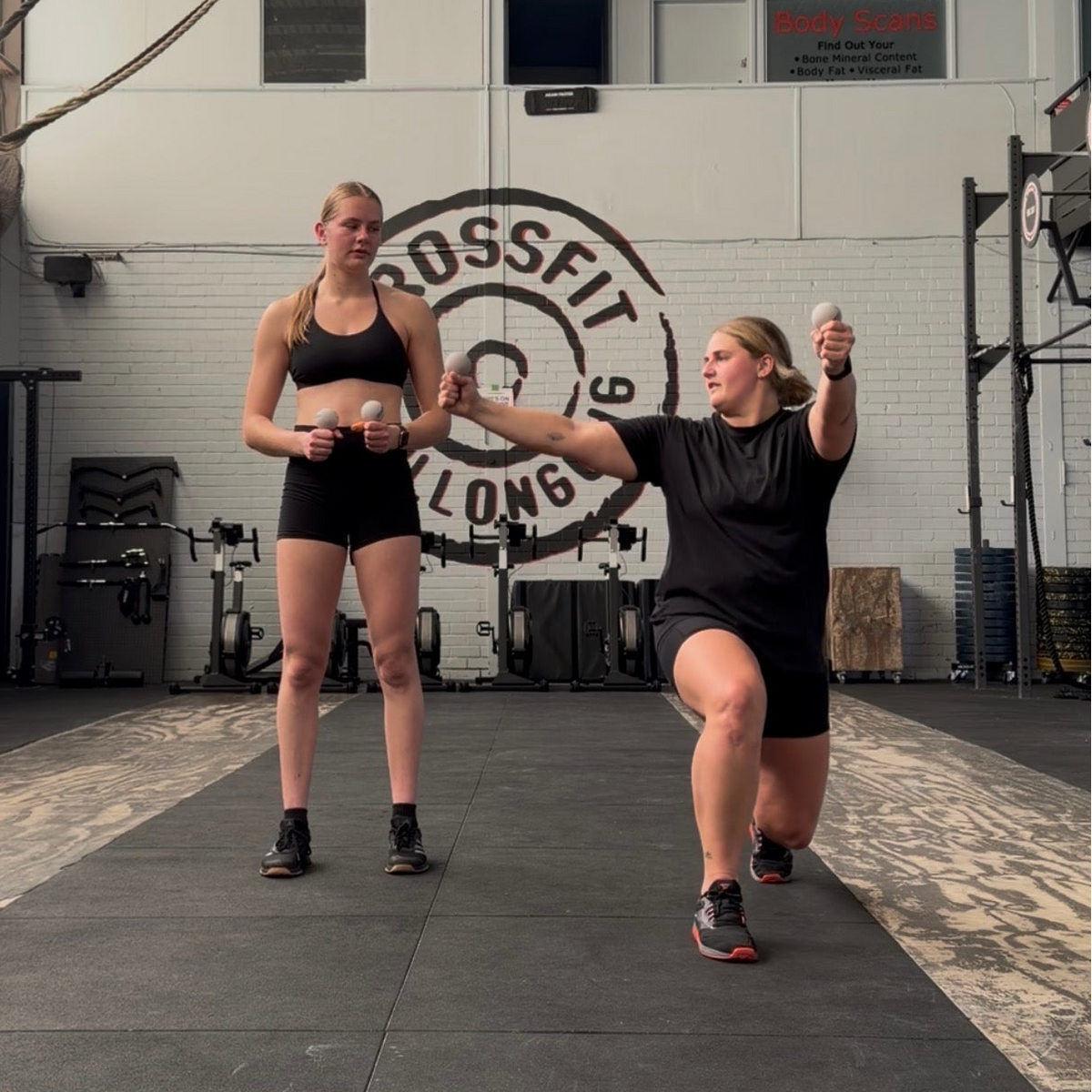
Balance can also form part of a co-ordination exercise. Consider an under-the-leg ball toss. As one leg leaves the ground, you need to organise your body position while simultaneously moving the ball beneath your raised leg. There is a balance demand and a co-ordination demand.
If you remove the ball and simply hold the one-leg position, the activity becomes much more focused on balance. Again, context matters.
Can One Drill Train Multiple Things?
Absolutely. In fact, many movement activities don't fit neatly into one category.
Take a partner reaction drill.
You stand in the centre of four markers.
Your partner calls a direction.
You move to the marker, change direction, return to the centre and catch a ball.
The exercise may involve:
- Co-ordination
- Direction changes
- Reaction
- Balance
- Visual tracking
- Catching
- Full-body movement
That doesn't mean you need to give the drill seven different labels. It simply shows how movement qualities can interact.

Where Does Reaction Fit?
Reaction is another term commonly used alongside co-ordination and agility. A reaction-based exercise requires you to respond to information rather than knowing the entire movement sequence beforehand.
For example, running through a memorised marker pattern is predictable. Having a partner randomly call which marker you move toward introduces a reaction element. Add a ball and you can create an even more complex movement challenge.
What About Speed?
Speed can also overlap with these areas, but faster isn't automatically better. You can perform a co-ordination drill slowly. You can practise balance without moving quickly. You can learn the movement pattern of a directional drill before increasing pace. Speed is simply another variable that can be introduced when appropriate.
Which Should You Train?
You don't necessarily have to choose between them. Your training may naturally contain a mixture of co-ordination, balance, reaction, speed and directional movement depending on the activities you choose. A simple ball and marker setup can create exercises emphasising different areas.
For a co-ordination focus, you might use alternating throws and catches. For a balance-focused challenge, you could introduce a controlled one-leg position alongside an appropriate ball task. For directional movement, you might create a marker pattern. For reaction, have a partner determine the direction. Then you can combine them.
Start With the Foundation
When combining movement qualities, start with a version you can understand. If you're learning a marker reaction catch, for example, first learn the marker positions. Then add the directional call. Then add the catch.
Trying to learn everything simultaneously can make it difficult to establish any part of the pattern.

Movement Doesn't Need to Fit in a Box
At C.CADDY, we're interested in the foundations of movement and the different ways they can interact.
Co-ordination.
Balance.
Reaction.
Speed.
Rather than treating each as something that must always be trained separately, our approach is about creating simple activities that allow you to explore different movement patterns. Sometimes the challenge will come from your hands. Sometimes your feet. Sometimes your balance. Sometimes the fact that you don't know what your training partner is going to call next.
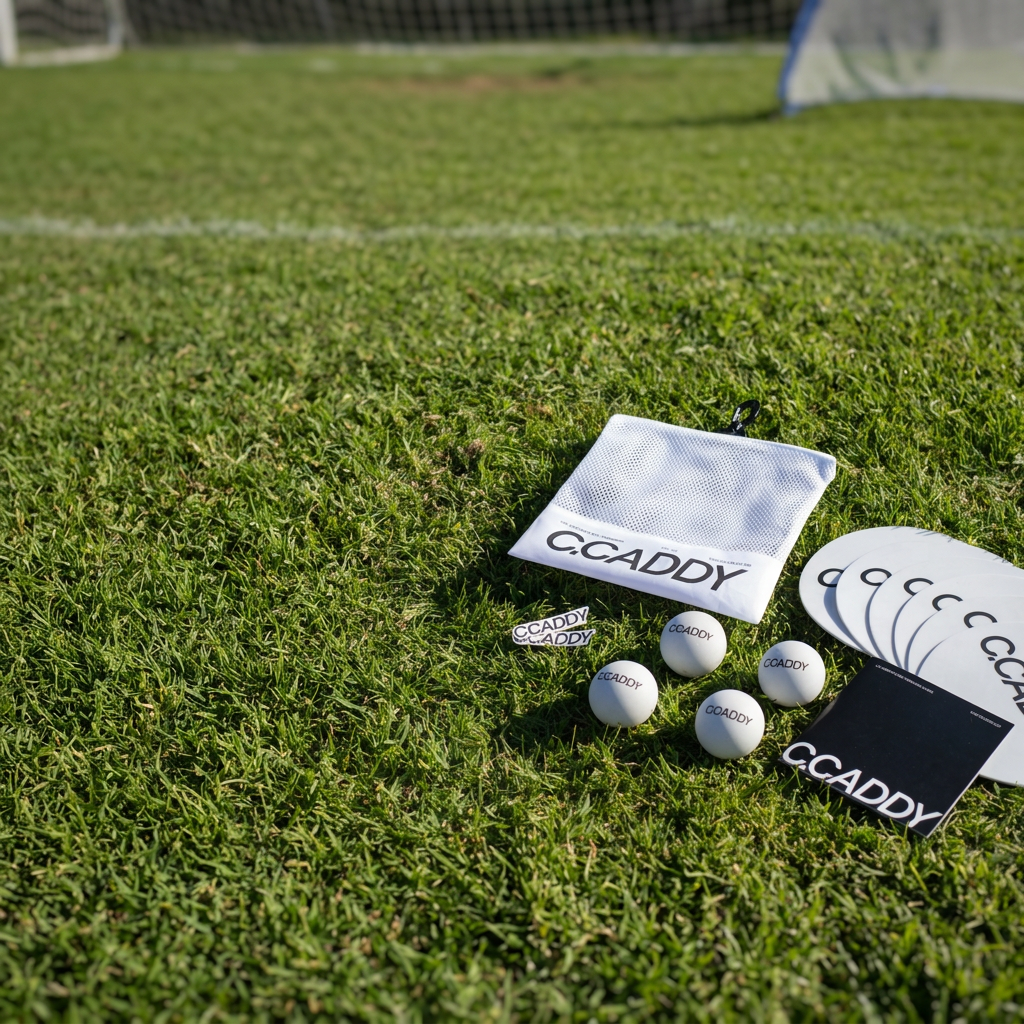
That's where simple equipment can become surprisingly versatile. With four balls, six markers and a little imagination, you can create hundreds of different combinations.
So don't worry too much about putting every movement into the perfect category. Set up the markers. Grab a ball. Start with a simple pattern. Then move, react and explore where it takes you.