
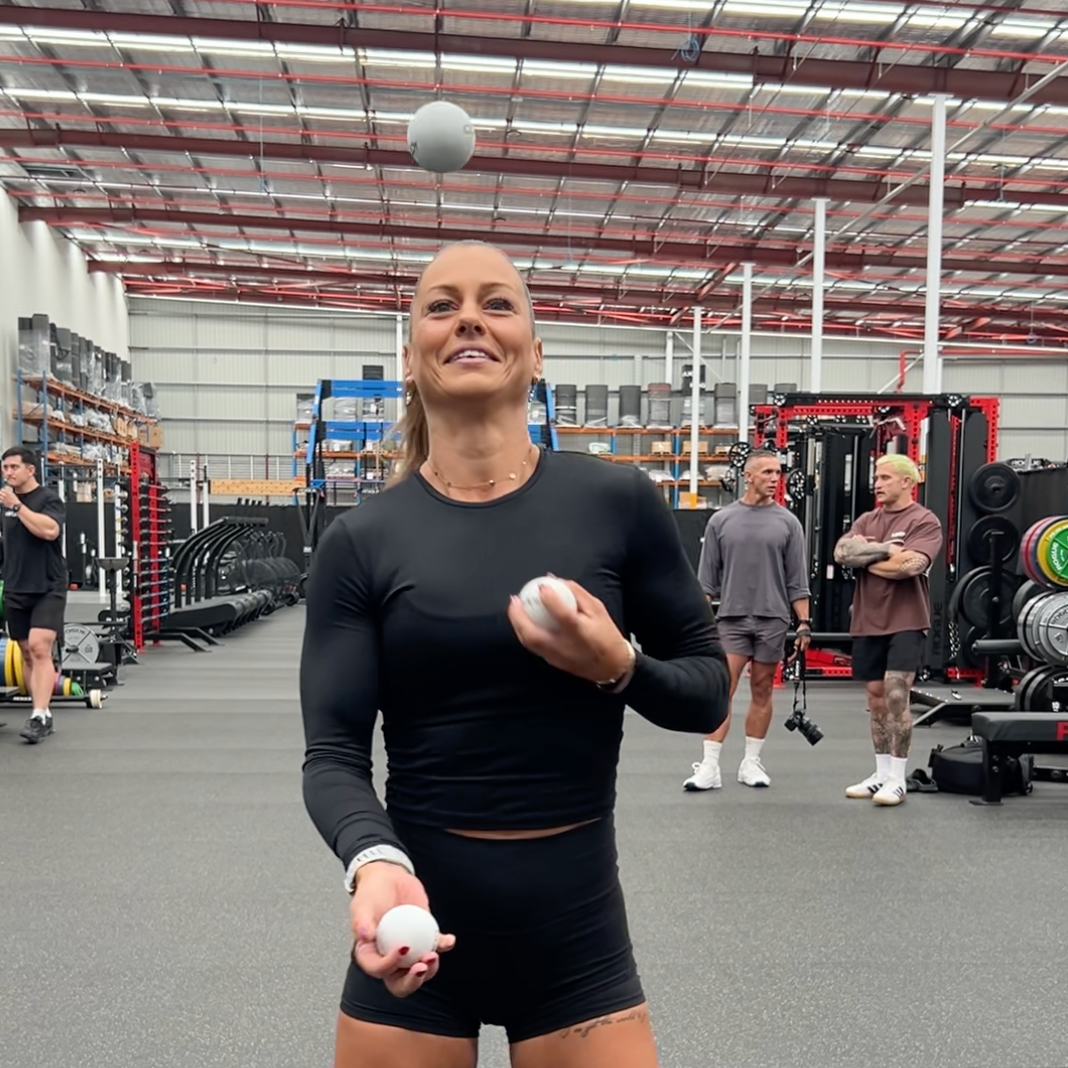
Can Juggling Improve Your Co-ordination? What Athletes Should Know
Juggling is often seen as a party trick or a skill reserved for performers, but it can also be an engaging way to practise co-ordination.
Whether you're an athlete looking for a new training challenge, a coach wanting to introduce more variety into sessions or someone interested in learning a new skill, juggling provides a practical opportunity to work on timing, visual tracking and controlled movement.
But can juggling actually improve your co-ordination?

The answer depends on what you mean by improvement, how regularly you practise and the skills you're trying to develop. Juggling requires coordinated movement, and practising it can help you become more familiar and consistent with the juggling pattern itself. Whether those improvements transfer to another sport or activity is a separate question.
At C.CADDY, we see juggling as one of many accessible ways to explore co-ordination training and make movement more engaging.
What Is Co-ordination?
Co-ordination is the ability to organise different movements so they work together towards a task. In sport, this might involve catching a pass while moving, positioning your body to strike a ball or adjusting your footwork in response to an opponent.
Different activities require different combinations of movement skills. Some place greater demands on hand-eye co-ordination, while others involve balance, timing, footwork or responding to visual and verbal cues.
Co-ordination is not one single ability that works identically across every situation. The skills required to juggle three balls, for example, differ from those needed to catch a fast-moving ball during a competitive match.
However, both activities involve learning and controlling movement in response to information.
What Happens When You Juggle?
Three-ball juggling involves repeatedly throwing and catching balls in a coordinated sequence.
Each throw follows an arc, and the next throw must be timed so the pattern can continue. The hands alternate between releasing and catching balls while the eyes track the movement.
This makes juggling a practical activity for challenging several movement-related skills.
1. Hand-eye co-ordination
Juggling requires you to use visual information to guide the movement of your hands.
You must track the balls, anticipate their trajectories and position your hands to catch them.
As you practise, you become more familiar with the movements and timing needed to maintain the pattern.
2. Timing and rhythm
A consistent juggling pattern relies on the timing of each throw.
If a ball is released too early, too late or in the wrong direction, the sequence can become difficult to maintain.
Practising the pattern provides opportunities to develop a more consistent rhythm and understand how each movement connects to the next.

3. Visual tracking
The balls are continually moving through the space in front of you. Following their trajectories and anticipating where they will descend is an important part of the task.
Visual tracking is also involved in many sporting activities, although the visual demands of juggling and competitive sport are not identical.
4. Controlled movement
Juggling requires repeated, deliberate movements of the hands and arms.
Beginners often find that exaggerated movements make the pattern harder to maintain. Learning to use a more consistent throwing arc can make the task easier to manage.
5. Attention and concentration
Keeping several balls moving in a sequence requires attention to the pattern.
When a throw goes off course, you need to adjust or reset. With practice, the basic sequence may become more familiar, allowing you to focus on maintaining consistency.
These are some of the reasons juggling can be an engaging co-ordination activity. However, they don't mean juggling automatically improves every aspect of athletic performance.
Does Juggling Improve Athletic Performance?
Juggling can help you practise juggling. With regular practice, you can work towards more consistent throws, catches and longer sequences. It also provides a way to challenge hand-eye co-ordination and timing in a specific context.
The more important question for athletes is whether these skills transfer to their chosen sport. Transfer depends on the task. A sport may involve different ball speeds, unpredictable opponents, complex decisions, movement under fatigue or equipment that changes the way an athlete interacts with an object.
For this reason, juggling should not be considered a replacement for sport-specific training. A footballer still needs to practise football skills. A boxer needs to develop the movement, technique and decision-making required for boxing. A CrossFit athlete needs to train the movements and physical qualities relevant to their events. Juggling can sit alongside these activities as a supplementary skill challenge. The best approach is to use it for what it offers: a simple, repeatable way to practise a coordinated movement pattern and introduce variety into training.
How to Use Juggling as Part of Co-ordination Training
If you're new to juggling, start with a simple progression rather than attempting three balls immediately.
Start with one ball
Throw a ball in a controlled arc from one hand to the other. Focus on accuracy, a consistent height and a comfortable catch.
Practise until you can repeat the movement without chasing the ball.
Introduce a second ball
Work on the timing of two consecutive throws. Focus on releasing the second ball as the first approaches the top of its arc.
Repeat the sequence slowly before progressing.

Work towards three balls
Once the two-ball exchange becomes more familiar, practise the three-ball cascade in short sequences.
Expect to drop the balls while learning. Reset, repeat the movement and focus on consistency rather than speed.
Practise regularly
Short, regular sessions can help you become more familiar with the sequence.
Try a few minutes of juggling as a standalone activity or incorporate it into a broader co-ordination session with throwing, catching and partner drills.
Keep the difficulty manageable and stop if the activity causes discomfort.
Other Co-ordination Drills to Try
Juggling is only one option. If you want to explore a broader range of co-ordination activities, try combining it with other ball-based exercises.
Partner catching: Throw and catch a ball with a training partner, gradually varying the direction and height of the passes.
Reaction catches: Have a partner provide a visual or verbal cue before throwing the ball. Keep the throws predictable enough to maintain control.
Marker movement: Arrange flat markers in a simple pattern and practise moving between them while responding to a coach's instructions.
Ball passing sequences: Work with a partner or group to complete a repeating series of passes, focusing on timing and accuracy.
These activities can be adapted for different abilities and environments, from a backyard session to a team warm-up.
For athletes, select drills that complement your sport and existing training. For coaches, keep instructions clear and provide easier progressions for beginners.
Why Co-ordination Training Should Be Engaging
Learning a new movement skill can be challenging, but it can also be enjoyable.
Activities that encourage experimentation and repetition give people a reason to keep practising. They also provide an opportunity to move outside familiar routines and discover different ways to challenge themselves.
At C.CADDY, we believe training can combine purpose with play. Co-ordination activities don't need to be complicated or require a large training space to be worthwhile.
The key is to choose an appropriate challenge, practise consistently and enjoy the process of learning.
Explore Co-ordination Training With C.CADDY
The C.CADDY Co-ordination Kit is designed to help athletes, coaches, teams and everyday movers explore a range of ball-based movement activities.
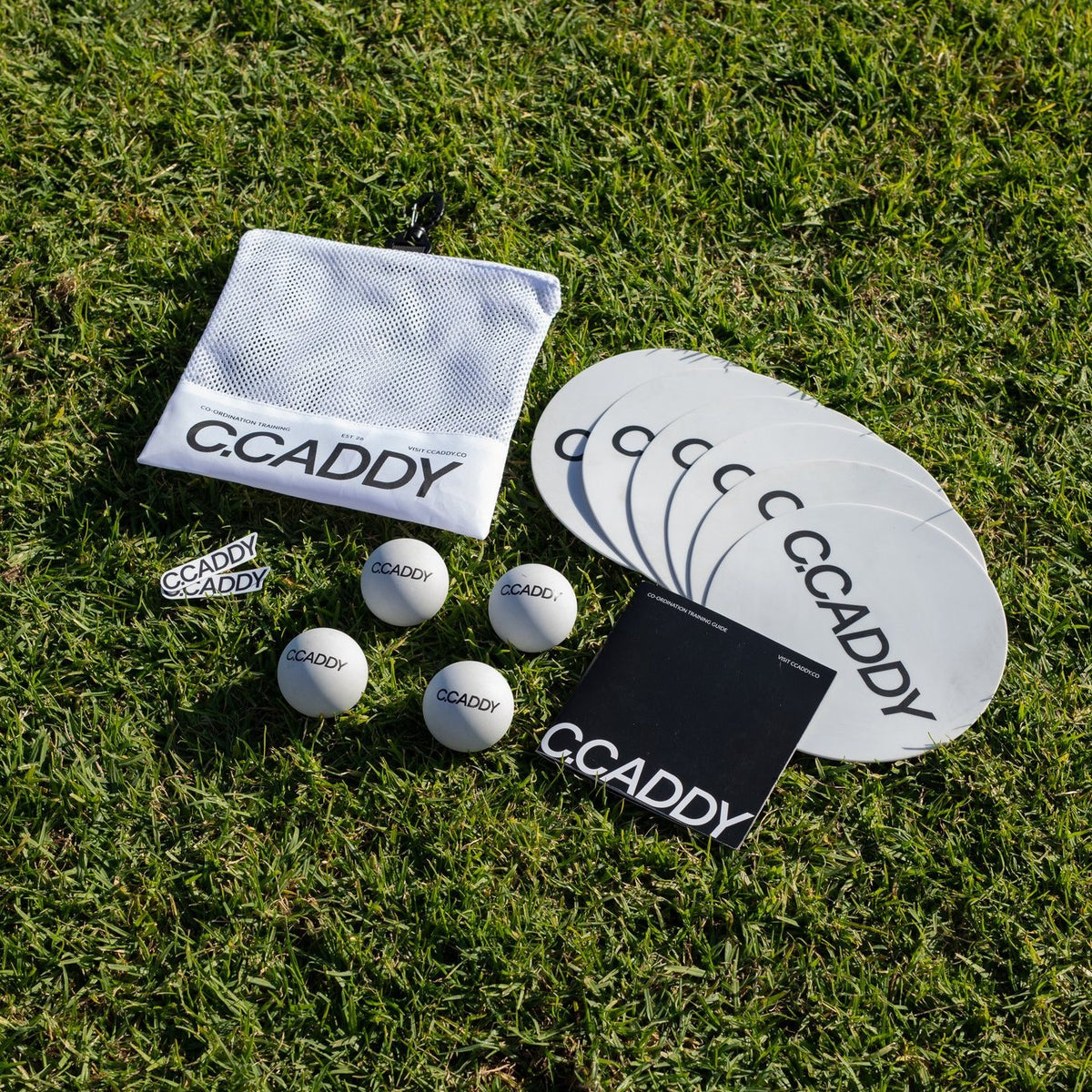
Each kit includes four rubber balls, six flat training markers, a 24-page Training Guide and access to the Training Vault through a QR code.
Inside, you'll find video tutorials and drills covering foundational skills, intermediate and advanced activities, and partner and team challenges.
Use the kit to practise throwing and catching, introduce reaction drills or build a session around timing, hand-eye co-ordination and body control.
Whether you're learning to juggle for the first time or looking for new ways to bring co-ordination into your training, there's always another skill to explore.
Train different. Find those 1%ers. Discover the C.CADDY Co-ordination Kit and start exploring your next movement challenge.
Read more
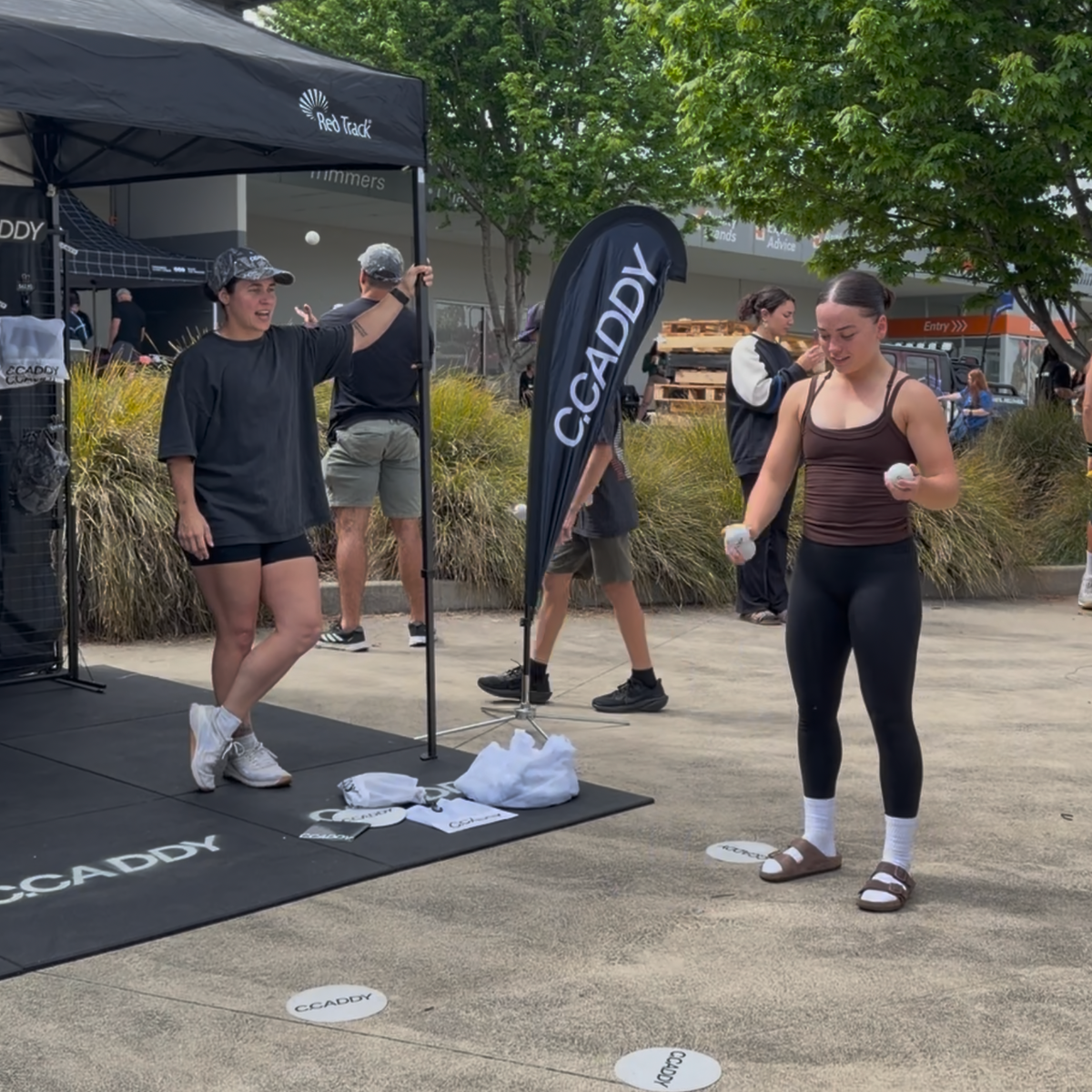
Looking for new co-ordination drills to add to your training? You don't need to reinvent your entire workout. Co-ordination can be explored through simple movements involving throwing, catching, bo...
You don't need a gym membership, a dedicated training facility or a cupboard full of equipment to start exploring co-ordination training at home. With a ball, a few training markers and enough clea...