
Beginner Hand-Eye Co-ordination Drills: Where to Start
If you've watched someone juggle four balls while moving between markers and thought, there is absolutely no chance, don't worry. That's not where you need to start. Like most forms of training, hand-eye co-ordination training can be progressed. You don't need to catch multiple balls, react at lightning speed or master complicated patterns on day one. The best beginner hand eye coordination drills start with simple movements you can control before gradually adding another challenge.

What is hand-eye co-ordination?
Hand-eye co-ordination involves using information from your vision to help guide movement of your hands. A simple catch is a good example. You see the ball moving towards you and organise your hand and body position to receive it. When you're a beginner, the goal doesn't need to be making this as difficult as possible. Instead, get comfortable with basic throwing, tracking and catching patterns.
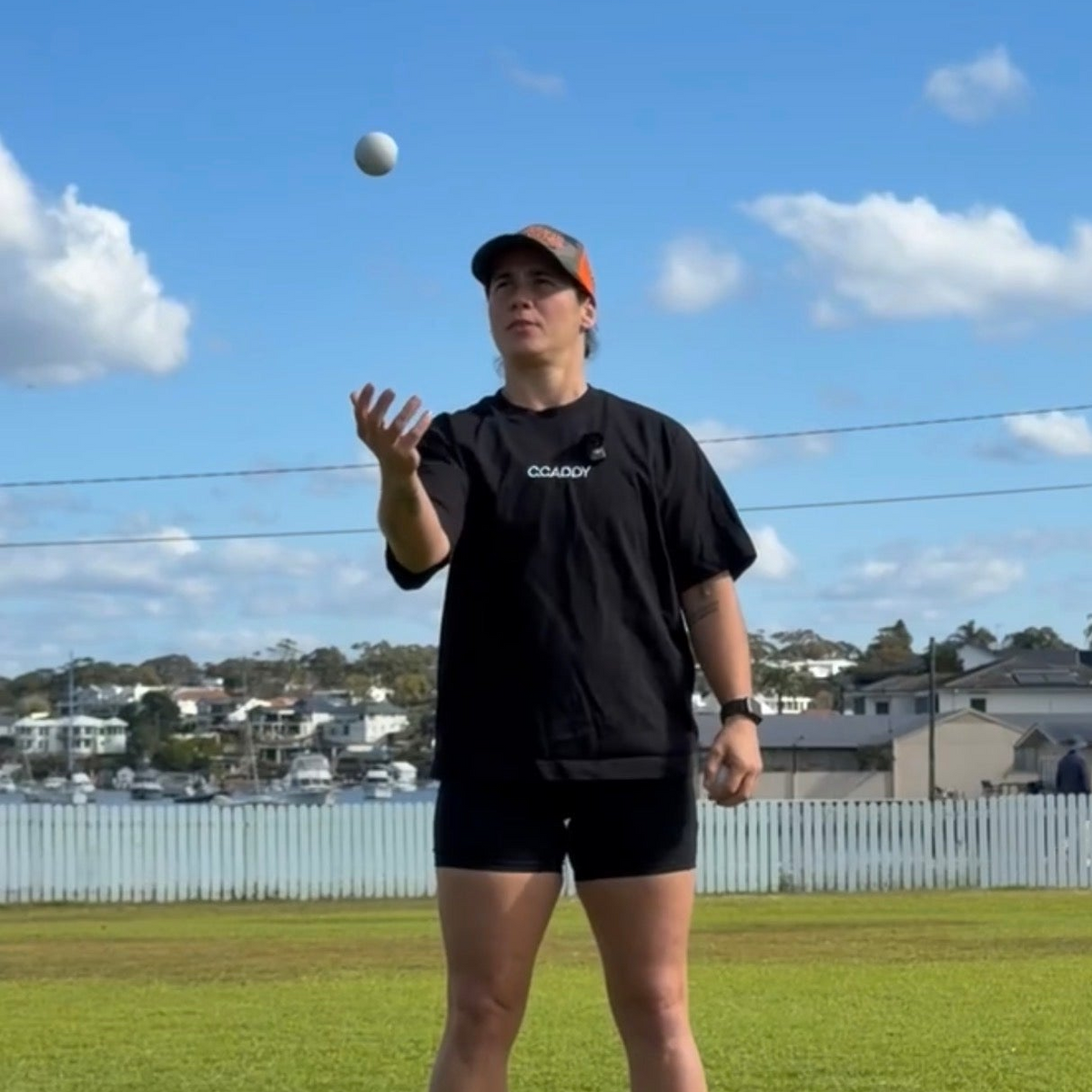
Drill 1: Two-Hand Toss & Catch
Start with one ball.
Hold it in both hands, toss it gently upwards and catch it with both hands.
Keep the toss relatively low and controlled.
Your first goal is simply becoming comfortable tracking the ball up and back down.
Drill 2: Single-Hand Toss & Catch
Now use one hand.
Toss and catch on the same side.
Complete several repetitions before changing hands.
You'll probably notice one side feels easier.
That's normal.
Drill 3: Hand-to-Hand Toss
Toss the ball from your right hand to your left.
Then return it.
Keep the arc controlled.
As your confidence grows, gradually increase the distance between your hands.
Drill 4: Bounce & Catch
Bounce the ball into the ground and catch it with both hands.
Then progress to one.
The bounce changes the trajectory and introduces another element for you to track.
Drill 5: Wall Catch
If you have access to an appropriate clear wall, gently throw the ball against it and catch the rebound.
Stand reasonably close initially.
As you develop control, experiment with distance and different hands.
Drill 6: Toss + Tap
Toss the ball.
Tap your shoulder.
Catch it.
That's it.
Once you can do that consistently, change the movement.
Tap your head.
Tap your knee.
Try two taps.
You're beginning to coordinate another body movement while still tracking the ball.

Drill 7: Step & Catch
Introduce a little lower-body movement.
Toss the ball, take a small lateral step and catch it.
Alternate directions.
This is a simple way to begin progressing from stationary hand eye coordination exercises into full-body movement.
When should you progress?
There's no magic number. A useful rule is to progress when the exercise feels controlled enough that you want another challenge. That doesn't mean you need 100% perfection.
You might:
Add another repetition
Use the opposite hand
Increase the height slightly
Add movement
Introduce a marker
Add a second ball
Ask a partner to throw
Progression doesn't always mean "faster." Sometimes changing the task is enough.
What if you keep dropping the ball?
Pick it up. That's genuinely part of it. If you're never dropping anything, the exercise might eventually be too easy. But if you're dropping nearly every attempt, simplify the drill. Find the point between impossible and automatic. That's usually where things stay interesting.
How long should beginners train?
You don't need an hour-long co-ordination workout. Start small. A handful of drills for a few minutes can be enough to familiarise yourself with the movements.
You can add co-ordination training for beginners to a warm-up, home workout, gym session or simply do it as a standalone movement break.
What equipment does a beginner need?
You can start with one suitable ball. That's enough for many foundational exercises. As you want more variety, multiple balls and flat markers allow you to add:
Multi-ball exercises
Footwork
Directional movement
Partner drills
Reaction challenges
The C.CADDY Co-ordination Kit was designed to provide that progression without making the equipment complicated.

Foundation before advanced
Our Training Vault is separated into Foundation, Intermediate, Advanced and Partner & Team training because everyone needs a different starting point.
Foundation isn't "the easy stuff you need to rush through." It's where you learn the movements that more complicated drills are built on. Start there.
Bring some play back into training
There's another reason to start simple. You can actually enjoy it. Set yourself little challenges. See if you can complete 10 catches. Try the other hand. Get someone else involved. Invent your own pattern.
Co-ordination training doesn't need to feel like another workout you have to tick off. It can simply be another way to move.
Ready to start?
If you're looking for beginner hand eye coordination drills, don't overcomplicate your first session. One ball. One drill. A little space. Start there. Then when you're ready, add another challenge.
The C.CADDY Co-ordination Kit gives you four rubber balls, six flat training markers, a 24-page Training Guide and access to our online Training Vault, with exercises ranging from Foundation through to Advanced.
You don't need to be co-ordinated to start. That's kind of the point.
Read more
Athletic training can involve strength, conditioning, speed, technical practice and sport-specific skills. With so many areas competing for training time, where does co-ordination training for athl...

Strength. Speed. Conditioning. Skills. Athletes can have a lot to fit into a training week. But there's another part of movement that can sometimes receive less direct attention: co-ordination. Han...