
Sport-Specific Co-ordination Training: Why Co-ordination Matters Across Different Sports
Every sport places different demands on the body. A soccer player needs to control a ball with their feet while scanning the field. An AFL player may need to track a ball, react to an opponent and catch while moving. A boxer needs to coordinate their hands, feet, eyes and body while responding to an opponent.

While the movements are different, they all rely on co-ordination.
Sport-specific co-ordination training can help athletes practise movement skills that are relevant to their chosen sport while also developing broader movement qualities such as timing, reaction, balance and body control.
What Is Sport-Specific Co-ordination Training?
Sport-specific co-ordination training involves adapting co-ordination drills to reflect the movements, reactions and skills used in a particular sport.
Rather than treating co-ordination as one generic skill, coaches can create drills that challenge athletes in ways that relate to their sporting environment.
This could involve:
-
Sport-specific movements
-
Ball control
-
Reaction to visual cues
-
Footwork
-
Hand-eye co-ordination
-
Timing
-
Balance
-
Change of direction
-
Partner reactions
-
Decision-making
The aim is to create training challenges that complement regular sport-specific practice.
Co-ordination Training for AFL
AFL players regularly need to track a moving ball, judge distance, react quickly and control their bodies while running. Co-ordination drills for AFL can include:
-
Reaction catching
-
Moving catches
-
Partner ball drills
-
Ball tracking
-
Footwork around markers
-
Change-of-direction drills
-
Visual reaction exercises
These drills can be progressed by adding movement, increasing speed or introducing unpredictable throws and cues.

Co-ordination Training for Soccer
Soccer requires athletes to coordinate their feet, eyes and body while constantly responding to players, space and the ball. Co-ordination exercises can focus on:
-
Foot-eye co-ordination
-
Ball control
-
Fast feet
-
Passing accuracy
-
Reaction to movement
-
Direction changes
-
Balance and body control
Simple markers can create movement patterns, while a ball adds an additional layer of coordination.
Co-ordination Training for NRL
NRL athletes operate in a fast and reactive environment where catching, passing, footwork and body control all need to happen under pressure. Co-ordination drills can incorporate:
-
Passing and catching
-
Reaction drills
-
Partner movement
-
Direction changes
-
Ball handling
-
Footwork
-
Visual and verbal cues
Adding an unexpected cue can make a familiar movement more challenging and encourage athletes to react rather than simply anticipate.
Co-ordination Training for Basketball
Basketball involves constant changes in direction, passing, catching, footwork and reactions. Co-ordination training for basketball can include:
-
Passing drills
-
Catching drills
-
Reaction catches
-
Footwork patterns
-
Partner drills
-
Movement around markers
-
Multi-task drills
For example, a player could move between markers while reacting to a partner's call or receiving a ball.
Co-ordination Training for Tennis
Tennis requires athletes to constantly track a moving ball and coordinate their feet, hands and body position.
Co-ordination drills can target:
-
Reaction
-
Timing
-
Footwork
-
Balance
-
Ball tracking
-
Movement into position
Partner-based drills are particularly useful because they can introduce unpredictability into the training environment.

Co-ordination Training for Boxing
Boxing isn't only about punching. Athletes need to coordinate their hands, feet, eyes and body while responding to another person's movement.
Co-ordination training can include:
-
Reaction drills
-
Hand-eye co-ordination
-
Footwork
-
Partner cues
-
Target reactions
-
Movement and catch combinations
-
Balance challenges
Adding visual or verbal cues can encourage athletes to react rather than rely entirely on predetermined movements.
Co-ordination Training for CrossFit & Gym Training
Co-ordination is also relevant outside traditional field and court sports.
Functional training, CrossFit and gym-based movement can all involve timing, body control and multi-step movement patterns.
Co-ordination drills can be used as:
-
Warm-ups
-
Movement preparation
-
Skill challenges
-
Partner activities
-
Finisher exercises
-
Active recovery activities
They can also provide a way to introduce more variety into a training session.
Why Train Co-ordination Outside Your Sport?
Sport-specific training is essential, but co-ordination doesn't have to be limited to your normal sport practice.
Simple drills can help athletes practise fundamental movement qualities in a different environment.
Changing the drill, stimulus or starting position can challenge athletes to adapt rather than simply repeat familiar patterns.
That's where co-ordination training can become a useful addition to a broader training program.
How to Make Sport-Specific Co-ordination Drills More Challenging
Once athletes become comfortable with a drill, you can introduce new variables.
Try:
Adding movement
Perform the drill while moving instead of standing still.
Increasing speed
Reduce the time available to respond.
Adding a partner
Introduce an unpredictable stimulus.
Changing the cue
Use visual, verbal or physical cues.
Adding multiple objects
Introduce additional balls or targets.
Combining movements
Ask athletes to perform two tasks at once.
Changing the environment
Move the drill from the gym to the field, court or backyard.
Train the Foundations. Adapt the Drill.
Co-ordination is a foundation of movement, but the way it is trained can change depending on the athlete and their sport.
The same ball, markers and basic movement principles can be adapted for AFL, NRL, soccer, basketball, tennis, boxing, CrossFit and everyday movement.
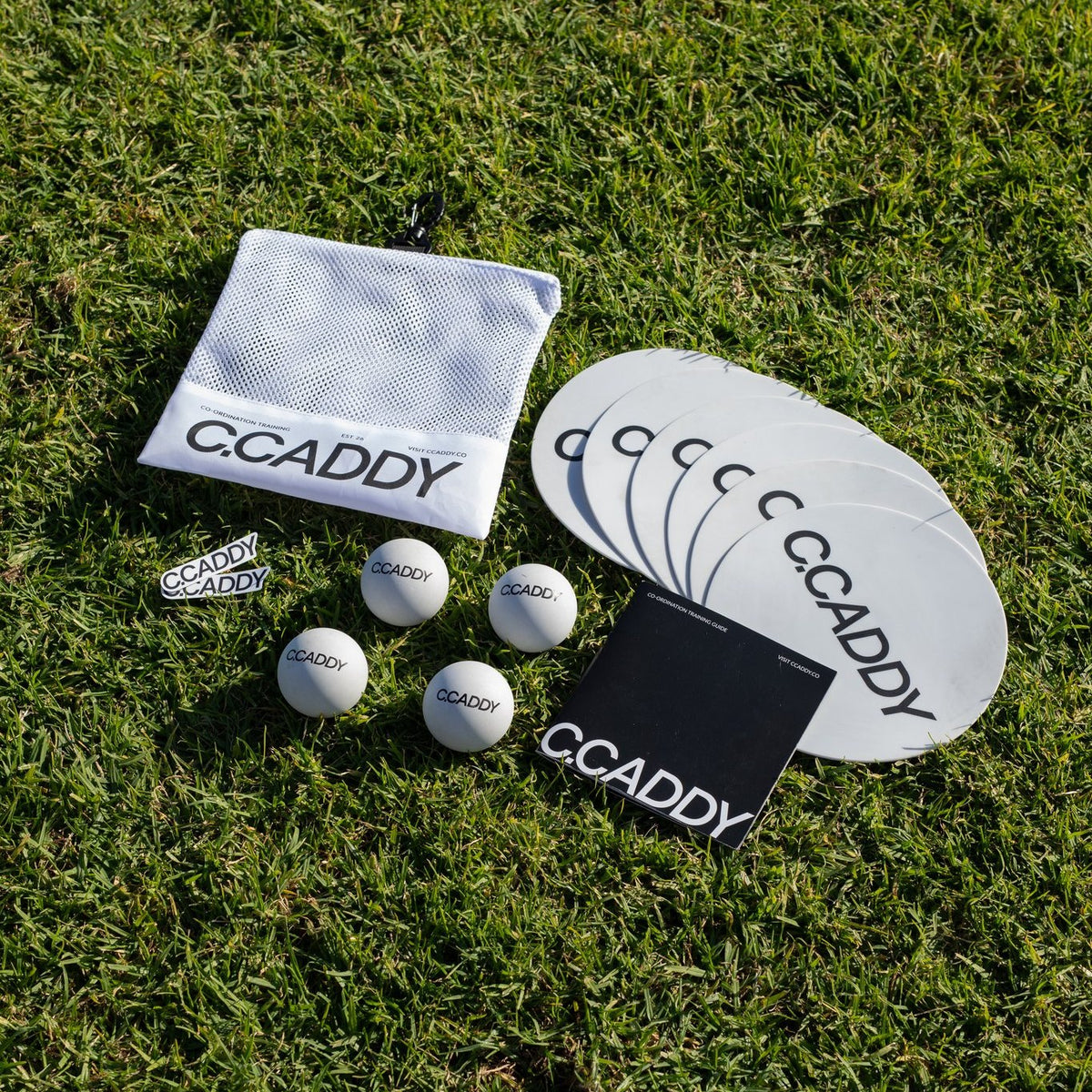
That's the idea behind C.CADDY.
A portable co-ordination kit designed to help athletes, coaches, teams and everyday movers train co-ordination, reaction, balance, timing and body control through simple, adaptable drills.
Explore sport-specific co-ordination training and find drills for your sport.
Read more
Co-ordination training is an important part of developing well-rounded athletes. Whether you're coaching a junior team, running a high-performance program or working with athletes individually, co-...

Kids learn through movement. Running, jumping, catching, throwing, balancing and changing direction all give children opportunities to explore how their bodies move and respond to the world around ...