
Hand-Eye Co-ordination Equipment: What Can You Use?
Search for hand eye coordination equipment and you'll find everything from a basic tennis ball to electronic reaction-light systems. So what do you actually need? The answer depends on what you're trying to do.
Different equipment can create different challenges involving visual tracking, catching, reaction, movement and decision-making. But you certainly don't need to start with the most complicated option.
Here's a breakdown of some common equipment you can use for hand-eye co-ordination training.

1. Balls
Let's start with one of the simplest options.
A ball can be:
Thrown
Caught
Bounced
Rolled
Rebounded off a wall
Passed to a partner
Used with one hand
Combined with other balls
That makes balls incredibly versatile co-ordination training equipment.
One ball is enough to start.
Multiple balls allow you to progress into alternating and multi-ball drills.
2. Flat training markers
Markers aren't specifically hand-eye equipment, but they can make ball drills more dynamic.
Place them on the ground to create:
Movement zones
Directional patterns
Footwork challenges
Reaction points
Partner stations
Now you're combining upper-body ball control with lower-body movement.
3. A wall or rebound surface
A suitable wall can turn one ball into a solo training partner.
Wall tosses allow you to work through repetitive catching and throwing patterns while adjusting to the rebound.
Change your distance, hand or throwing angle to alter the drill.
Always make sure the surface and surrounding area are appropriate.
4. Reaction balls
Reaction balls are designed to create less predictable rebounds.
Because you can't always know exactly where they'll travel, they can introduce an additional reactive element to catching exercises.
They're one option when you specifically want an unpredictable bounce.
5. Agility equipment
Cones, markers and agility ladders can be combined with hand-eye exercises to incorporate footwork and movement.
For example, move through a marker pattern while receiving passes from a partner.
The equipment itself isn't training your hands and eyes. It's changing the movement demands around the catching task.
6. Electronic reaction lights
Electronic reaction-light systems can provide visual cues that athletes respond to by touching, moving towards or reacting to a light.
These systems can be useful when you want programmable visual stimuli, structured reaction tasks or measurable results.
Research continues to investigate technology-assisted visuomotor training in sport, including electronic systems, with some studies reporting improvements in selected reaction and movement outcomes.
They're one option, but they're not the only way to create reaction-based training.

7. A partner
Technically, they're not equipment.
But a good training partner might be one of the most useful tools available.
A partner can change:
Throwing direction
Speed
Timing
Height
Verbal cues
Movement instructions
Most importantly, they can make a drill unpredictable.
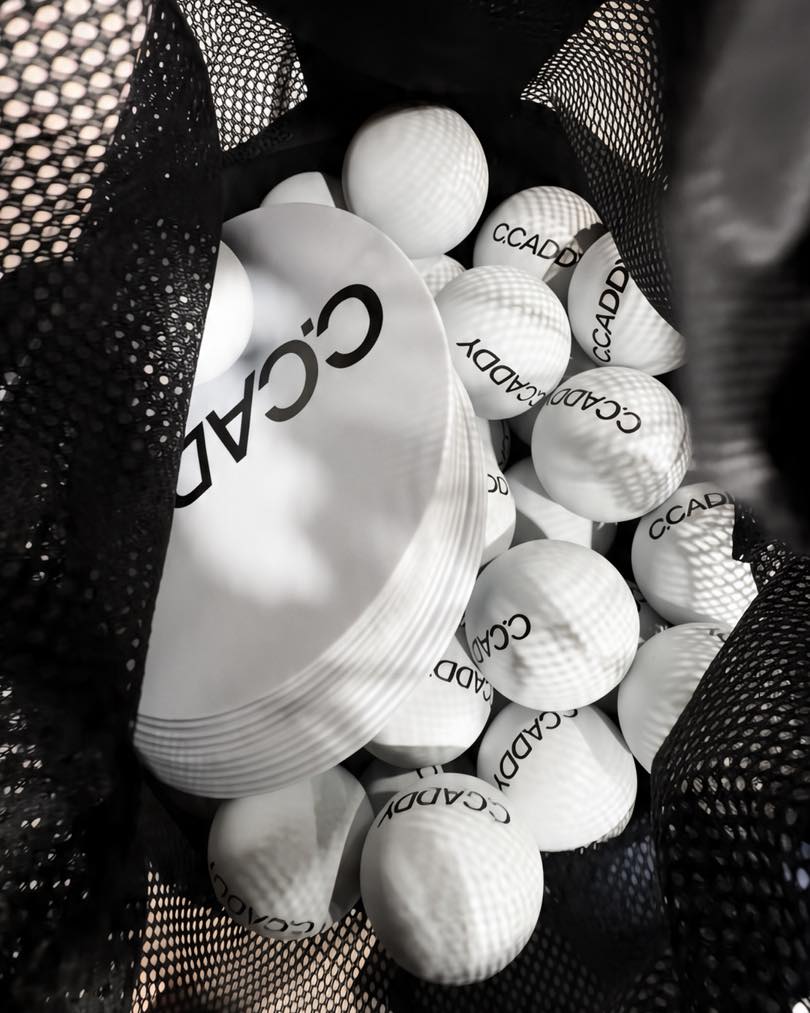
8. The C.CADDY Co-ordination Kit
We created C.CADDY because the individual pieces of equipment aren't particularly complicated. The challenge is often knowing what to do with them. The C.CADDY Co-ordination Kit brings together:
4 x C.CADDY Rubber Balls
6 x Flat Training Markers
24-Page Training Guide
Access to the C.CADDY Training Vault
Portable Carry Bag
So rather than buying hand eye coordination equipment and then searching for ideas, you've got a guided place to start.
What equipment is best for beginners?
Keep it simple. A suitable ball and clear training area can be enough for your first exercises.
Start with:
Toss and catch
Alternating hands
Wall toss
Bounce and catch
Partner pass
Once those feel manageable, add another ball or introduce markers.
The equipment should support the progression, not make the exercise unnecessarily complicated.
What about athletes?
Athletes can choose equipment based on the challenge they want to create.
Balls are useful for tracking and catching.
Markers introduce movement.
Partners create unpredictability.
Electronic systems can provide controlled visual cues.
Sport-specific equipment can make training more representative of competition.
There doesn't have to be one winner.
Different tools can sit alongside one another.

Do you need expensive equipment?
No.
The price or technology level of a piece of equipment doesn't automatically determine how useful a drill will be.
A simple ball drill can be extremely challenging when you add another ball, change hands, introduce movement or bring in a partner.
That's part of why we love co-ordination training.
Simple tools can create a lot of possibilities.
What should you look for in hand-eye co-ordination equipment?
Think about:
Versatility: Can you create multiple exercises?
Progression: Can drills become easier or harder?
Portability: Can you train in different locations?
Guidance: Do you actually know what to do with it?
Enjoyment: Are you going to want to use it?
That last point matters more than people sometimes realise.
Equipment is only the starting point
You can have every training gadget available and still need a good exercise.
That's why C.CADDY focuses on both equipment and training ideas.
Start with simple tools.
Learn how to use them.
Then keep finding new ways to challenge yourself.
Explore the C.CADDY Co-ordination Kit and see what's possible with four balls, six markers and a growing library of drills.
Read more
Big lifts, intense workouts and… juggling? C.CADDY is bringing a new skill to the CrossFit competition floor, with three-ball juggling making its debut at Battle of the Ages 2026. When you think of...
You don't always need a gym, sports field or pile of equipment to add something different to your training. Sometimes a ball and a few minutes are enough. If you're searching for hand eye coordinat...